
English| EUR
Suggested for you
More currencies
Choose a language
Acatenango is a single climb that crosses four ecological zones and roughly 1,500 metres of vertical gain, and the pack you shoulder at La Soledad decides how the last two hours feel. This acatenango overnight hike packing list guide sets out what belongs in the bag, what the trekking outfitters already carry up, and what only adds dead weight. It also flags the cash and timing details people discover too late.
Quick answer
Pack warm layers, a headlamp, three litres of water, and 100 GTQ in cash for the conservation fee, which is payable per person at the trailhead. Most organised treks supply tents, sleeping bags, dinner and breakfast, so the personal load stays near six to eight kilograms. Trails are open 00:00–23:59 daily, though guided departures leave La Soledad between 08:00 and 09:00.
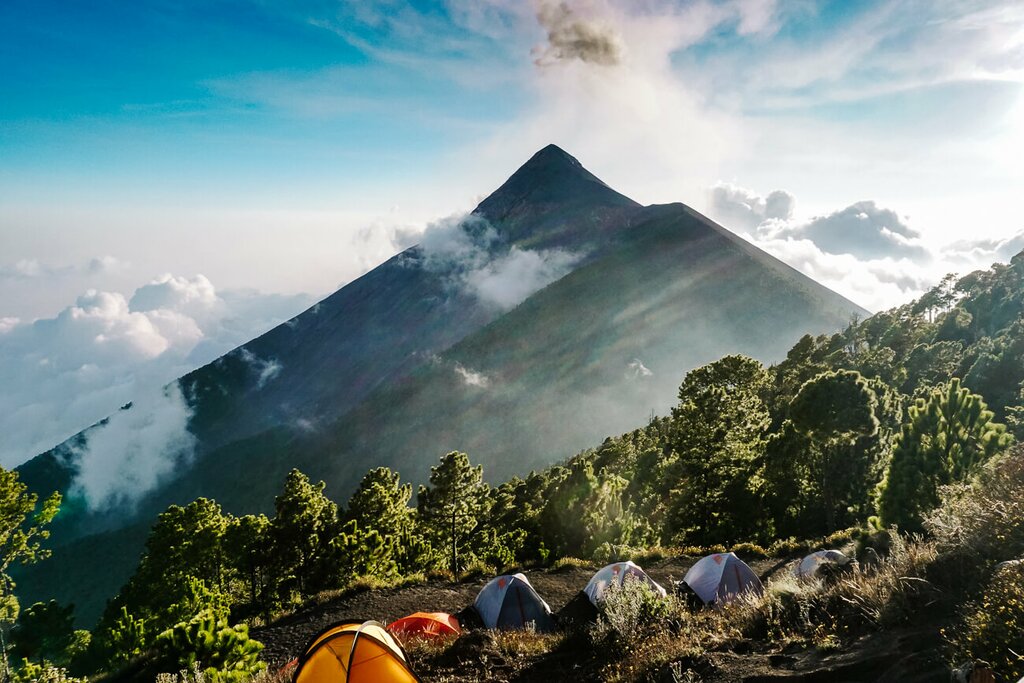
Base camp on Acatenango sits high enough that the temperature can swing more than twenty degrees between the afternoon arrival and the pre-dawn summit push. That single fact governs almost every decision on an acatenango overnight hike packing list: the mountain is not one climate but several stacked on top of each other, and the bag has to answer for all of them. Hikers begin among the maize terraces and coffee plots above La Soledad in strong equatorial sun, pass through cloud forest thick with moss and bromeliads, and finish the day on volcanic scree where the wind arrives unbroken off the Pacific slope. The context that makes the answer sensible is the division of labour. Acatenango is climbed almost exclusively with licensed guides, and the trekking outfitters based in Antigua Guatemala carry the heavy infrastructure — tents, sleeping bags, foam pads, cookware, firewood and both meals — up to camp themselves or via porters and mules. The visitor's own load is therefore narrower than most first-timers assume: clothing, water, a headlamp, personal medication, documents and cash. Overloading is the more common error than underpacking. Every extra kilogram is felt on the steep sandy sections below the ridge, where the ground gives back roughly a third of each step. What to do with that knowledge is simple enough. Confirm the exact inclusions with the operator before packing anything, because provision varies between a Volcán de Acatenango trek that supplies full thermal kit and one that expects hikers to arrive self-sufficient. Weigh the loaded pack at the guesthouse. Anything above eight kilograms deserves a second look, particularly if the itinerary adds the Fuego ridge extension in the evening, which is a further two hours of walking on tired legs. The conservation fee is collected in cash at the trailhead, not online, so small notes belong in a front pocket rather than the bottom of the bag. Treated properly, an acatenango overnight hike packing list is less an inventory than a weight budget — and a sound Acatenango volcano hike preparation plan spends that budget on warmth, light and water before anything else.
“The mountain is not one climate but several stacked on top of each other, and the bag has to answer for all of them.”
Acatenango swings from humid farmland heat to near-freezing summit ridge wind in a single day, so gear choices matter more than fitness alone.
The dry season, spanning November to April, provides the most consistent visibility for viewing Fuego's eruptions. Clearer skies during these months significantly reduce the need for heavy rain gear in your pack.
Clear skies; 5°C to 20°C
Expect dry trails and stable volcanic visibility. Pack fewer waterproof layers but maintain thermal clothing for the summit.
Frequent storms; 5°C to 18°C
Expect mud and thick cloud cover. Prioritize high-quality waterproof shells and additional dry base layers in your pack.
—
Mid-week departures offer more space at the summit campsites. This timing allows for a quieter experience at the crater rim.
Verdict: The best time for optimal trail conditions and volcanic visibility is during the dry season, specifically from November to February.
The trailhead for the Acatenango overnight hike is located in the village of La Soledad, Acatenango, Guatemala. Most hikers reach this starting point via organized shuttle services from Antigua.
Shuttle from Antigua to La Soledad
Private transfer via RN-14 to La Soledad
Local trailhead access
The best arrival window is 08:00–09:00 to ensure enough time for final gear checks before the ascent. Using an organized shuttle is recommended as it simplifies logistics for reaching the trailhead compared to managing private vehicle parking.
Most packing problems on Acatenango come down to weight and footwear, not missing items. Every extra kilo is carried up roughly 1,500 vertical metres of loose volcanic ash, and stiff new boots have no forgiveness on that terrain.
Packing a full-size suitcase load into a trekking backpack
Aim for a loaded pack you can lift overhead comfortably — most hikers manage well under 8 kg once tent and shared cooking kit are carried by guides. Lay everything out, then remove a third before you leave Antigua.
Carrying multiple litres of water plus heavy snacks
Water is the single heaviest item, so carry what you need to camp rather than a full day's supply from the start, and confirm with your operator what is already carried up for you.
Wearing brand-new hiking boots bought days before
Break boots in over at least 30–50 km of walking across several weeks. If there is no time, wear well-worn trail shoes you already trust instead of untested new ones.
Ignoring hot spots until blisters form on the ascent
Stop at the first rub, tape the area, and re-lace. Ten minutes early saves a painful summit push at 03:00.
Bringing cotton clothing that stays wet after sweating
Choose synthetic or wool layers that dry as you climb. Cotton holds sweat and turns cold once you stop moving at camp above 3,500 m.
Overpacking spare clothes for a single night out
One change of dry sleeping clothes is enough. Extra outfits add weight without adding warmth on a trip that lasts under 24 hours.
Everything you need to know about acatenango overnight hike packing list
Your acatenango overnight hike packing list should prioritize thermal layers, a waterproof jacket, sturdy hiking boots, and a headlamp. Bringing a minimum of 3-4 liters of water and high-energy snacks is essential for the ascent.
When preparing for this Guatemalan landmark, ensure your gear includes gloves, a warm hat, and a sleeping bag rated for freezing temperatures. Many hikers also bring trekking poles to assist with the steep, volcanic scree sections during the climb.
The entrance fee is 100 GTQ per person, which must be paid in cash at the trailhead. Carrying small denominations is recommended, as change may not always be available for larger bills at the entrance.
The best arrival window for your trip is 08:00–09:00, which aligns with standard departure times for organized treks. Arriving during this period ensures you have sufficient time to reach camp before the late afternoon cloud cover settles.
The summit experiences sub-zero temperatures, so your acatenango overnight hike packing list must include moisture-wicking base layers and an insulated down jacket. Proper layering is critical for staying warm while waiting for eruptive activity from the neighboring Fuego volcano.
A common mistake is packing too much weight, which can make the strenuous incline significantly more difficult to manage. Focus on essential items only, as excess equipment often remains unused and adds unnecessary fatigue during the ascent.